
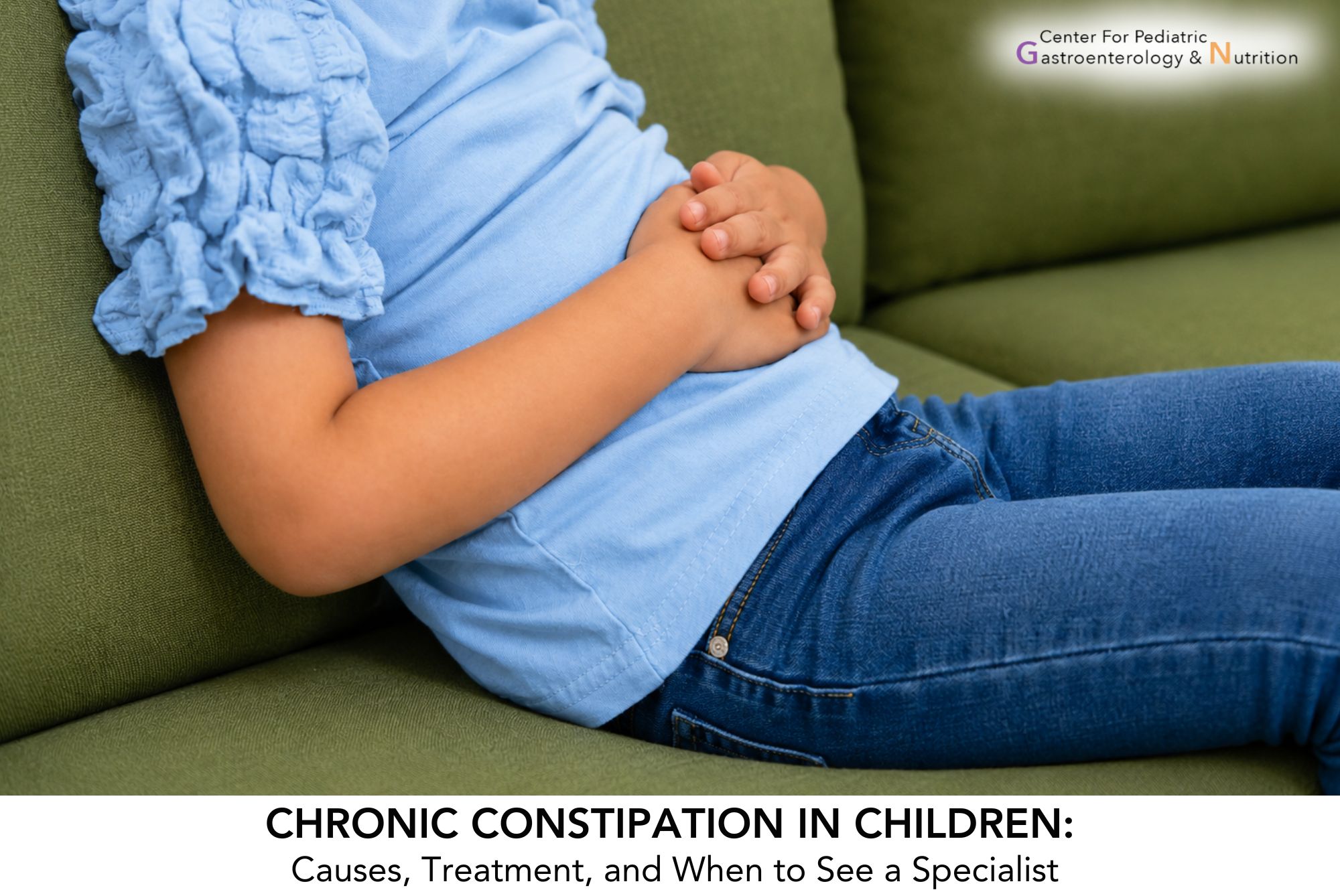
 Constipation is one of the most common digestive concerns affecting children and a frequent reason families seek care from a pediatric gastroenterologist. While occasional constipation is a normal part of childhood, chronic constipation can significantly affect a child’s comfort, appetite, mood, sleep, and overall quality of life. Left untreated, persistent constipation may lead to abdominal pain, stool withholding, fecal accidents, poor nutrition, and emotional distress.
Understanding the causes of chronic constipation, recognizing the warning signs, and seeking timely treatment can help children regain healthy bowel habits and prevent long-term complications. At Center for Pediatric Gastroenterology and Nutrition, our pediatric digestive specialists provide comprehensive evaluations and individualized treatment plans designed specifically for children.
What Is Chronic Constipation?
Chronic constipation refers to persistent difficulty passing stools or infrequent bowel movements that continue for several weeks or months. While bowel habits vary by age, children with chronic constipation often experience bowel movements fewer than expected, pass hard or painful stools, or avoid using the bathroom altogether because they fear discomfort.
Unlike occasional constipation that resolves with temporary dietary changes, chronic constipation usually requires a more comprehensive medical evaluation and treatment plan.
How Normal Bowel Habits Change Throughout Childhood
Children’s bowel movement frequency naturally changes as they grow.
- Newborns may have several bowel movements daily.
- Breastfed infants often have variable stool patterns.
- Todlers typically have one to three bowel movements each day.
- Older children may have anywhere from three bowel movements per day to three per week if stools remain soft and easy to pass.
Constipation is determined by stool consistency, difficulty passing stool, and associated symptoms—not simply the number of bowel movements.
Common Causes of Chronic Constipation in Children
Several factors can contribute to chronic constipation.
Functional Constipation
The vast majority of childhood constipation is classified as functional constipation, meaning there is no structural or serious disease causing the problem. Often, constipation begins after a painful bowel movement. The child starts withholding stool to avoid pain, making stools larger, harder, and even more painful to pass.
This creates a cycle that becomes increasingly difficult to break without medical treatment.
Low Fiber Intake
Children who consume limited fruits, vegetables, legumes, and whole grains often develop harder stools because fiber helps retain water and promotes healthy bowel function.
Inadequate Fluid Intake
Dehydration allows the colon to absorb more water from stool, resulting in firmer, more difficult bowel movements.
Toilet Training Challenges
Some children resist toilet training or avoid public restrooms at school, daycare, or while traveling. Repeated stool withholding can eventually lead to chronic constipation.
Dietary Changes
Changes in routine, starting school, vacations, illness, or transitioning to solid foods in infancy may temporarily disrupt bowel habits.
Lack of Physical Activity
Regular movement stimulates normal intestinal contractions. Sedentary children may experience slower bowel function.
Certain Medical Conditions
Although less common, chronic constipation may be associated with:
- Hypothyroidism
- Celiac disease
- Hirschsprung disease
- Spinal cord abnormalities
- Metabolic disorders
- Neuromuscular disorders
- Certain medications
A pediatric gastroenterologist can determine whether additional testing is necessary.
Symptoms of Chronic Constipation
Children with chronic constipation may experience a variety of symptoms, including:
- Fewer bowel movements than expected
- Hard, dry, or large stools
- Pain during bowel movements
- Straining
- Abdominal pain or cramping
- Bloating
- Decreased appetite
- Nausea
- Stool leakage (encopresis)
- Blood on toilet paper from small anal fissures
- Stool withholding behaviors such as crossing legs, standing stiffly, or hiding during the urge to have a bowel movement
Parents often mistake stool withholding behaviors as attempts to have a bowel movement when children are actually trying to prevent one.
Complications of Untreated Chronic Constipation
Without proper treatment, constipation can become progressively worse.
Potential complications include:
- Fecal impaction
- Stretching of the rectum
- Chronic abdominal pain
- Stool accidents
- Anal fissures
- Hemorrhoids
- Poor appetite
- Nutritional concerns
- Anxiety surrounding bathroom use
- Social embarrassment
Early treatment often prevents these complications from developing.
How Pediatric Gastroenterologists Diagnose Chronic Constipation
Diagnosis begins with a detailed medical history and physical examination.
Your child’s pediatric gastroenterologist may ask about:
- Frequency of bowel movements
- Stool appearance
- Pain during bowel movements
- Toilet habits
- Diet
- Fluid intake
- Growth and development
- Family history of digestive disorders
- Previous constipation treatments
Additional testing is only recommended when symptoms suggest an underlying medical condition or when constipation does not improve with appropriate therapy.
Possible diagnostic tests include:
- Blood tests
- Celiac disease screening
- Thyroid testing
- Abdominal imaging when indicated
- Specialized motility studies
- Contrast studies in select cases
- Rectal biopsy for suspected Hirschsprung disease
Treatment for Chronic Constipation in Children
Treatment focuses on relieving constipation while restoring normal bowel function and preventing recurrence.
Initial Stool Clean-Out
Children with significant stool buildup often require a physician-supervised bowel clean-out before maintenance treatment begins.
This step removes impacted stool and allows the intestines to function more effectively.
Maintenance Medications
Many children benefit from stool softeners or osmotic laxatives that keep stools soft and easier to pass. These medications are carefully selected based on the child’s age, symptoms, and medical history.
Parents should never discontinue prescribed constipation medications without guidance from their pediatric gastroenterologist.
Dietary Improvements
Nutrition plays an important role in managing constipation.
Recommendations often include:
- Increasing dietary fiber
- Eating more fruits and vegetables
- Choosing whole grains
- Drinking adequate water
- Limiting excessive processed foods
- Encouraging balanced meals
Every child’s nutritional needs are different, and personalized dietary recommendations often produce the best results.
Healthy Bathroom Habits
Children are encouraged to:
- Sit on the toilet after meals
- Use proper foot support
- Avoid rushing
- Respond promptly to the urge to have a bowel movement
- Establish consistent daily bathroom routines
Positive reinforcement is generally far more effective than punishment.
Behavioral Support
Children who develop fear or anxiety about bowel movements may benefit from behavioral strategies designed to reduce stool withholding and improve confidence.
Treating Underlying Conditions
If constipation is caused by an underlying medical disorder, treatment targets both the constipation and the primary condition.
When Should You See a Pediatric Gastroenterologist?
Parents should seek specialized evaluation if their child experiences:
- Constipation lasting several weeks despite home treatment
- Severe abdominal pain
- Blood in the stool
- Recurrent stool accidents
- Significant stool withholding
- Poor weight gain
- Vomiting
- Delayed passage of meconium after birth
- Persistent constipation despite medications
- Frequent emergency room visits for constipation
- Symptoms interfering with school or daily activities
Specialized care can identify underlying causes and provide more advanced treatment options when standard therapies are not effective.
Preventing Chronic Constipation
While not every case can be prevented, healthy lifestyle habits significantly reduce the risk.
Helpful strategies include:
- Offering plenty of water throughout the day
- Providing fiber-rich meals
- Encouraging daily physical activity
- Establishing regular toilet routines
- Responding promptly to bowel urges
- Addressing constipation early before it becomes chronic
- Maintaining regular pediatric checkups
Why Choose Center for Pediatric Gastroenterology and Nutrition?
Children require specialized digestive care that accounts for their growth, development, and emotional well-being. At Center for Pediatric Gastroenterology and Nutrition, our experienced pediatric gastroenterologists diagnose and treat chronic constipation using evidence-based, child-centered care.
We work closely with families to identify contributing factors, develop personalized treatment plans, improve bowel health, and help children return to comfortable, regular bowel habits while minimizing future complications.
Frequently Asked Questions
What causes chronic constipation in children?
The most common cause is functional constipation, which often develops after painful bowel movements lead to stool withholding. Diet, hydration, toilet habits, and certain medical conditions can also contribute.
How long is constipation considered chronic?
Constipation that persists for several weeks or longer despite routine home care is generally considered chronic and warrants medical evaluation.
Can constipation cause stomach pain?
Yes. Chronic constipation frequently causes abdominal pain, bloating, cramping, and discomfort due to retained stool in the colon.
Is it normal for children to avoid using the bathroom?
Some children avoid bowel movements because they fear pain or dislike using unfamiliar bathrooms. Persistent stool withholding, however, can worsen constipation and should be addressed.
Can constipation lead to stool accidents?
Yes. Severe constipation can cause liquid stool to leak around impacted stool, resulting in fecal soiling or encopresis.
Will my child need laxatives long term?
Some children require maintenance medications for several months while normal bowel function is restored. Your pediatric gastroenterologist will determine the safest treatment duration based on your child’s progress.
Does fiber alone cure chronic constipation?
While fiber is an important part of treatment, many children with chronic constipation require a combination of dietary changes, medications, hydration, behavioral strategies, and ongoing medical management.
Are imaging tests always necessary?
No. Most children are diagnosed through a detailed history and physical examination. Imaging and specialized testing are reserved for children with concerning symptoms or constipation that does not improve with standard treatment.
When should I worry about constipation?
Seek medical evaluation if constipation lasts several weeks, causes severe pain, blood in the stool, vomiting, poor growth, stool accidents, or does not improve with appropriate treatment.
Can chronic constipation be cured?
Most children experience significant improvement with proper treatment. Early intervention and consistent follow-up help prevent recurrence and long-term complications.
Contact Information
Center for Pediatric Gastroenterology and Nutrition
Website: https://centerforpedsgi.com
Request an Appointment: https://centerforpedsgi.com/appointments
Locations
- Evergreen Park
- Naperville
- Elmhurst
- Romeoville
- Highland


