
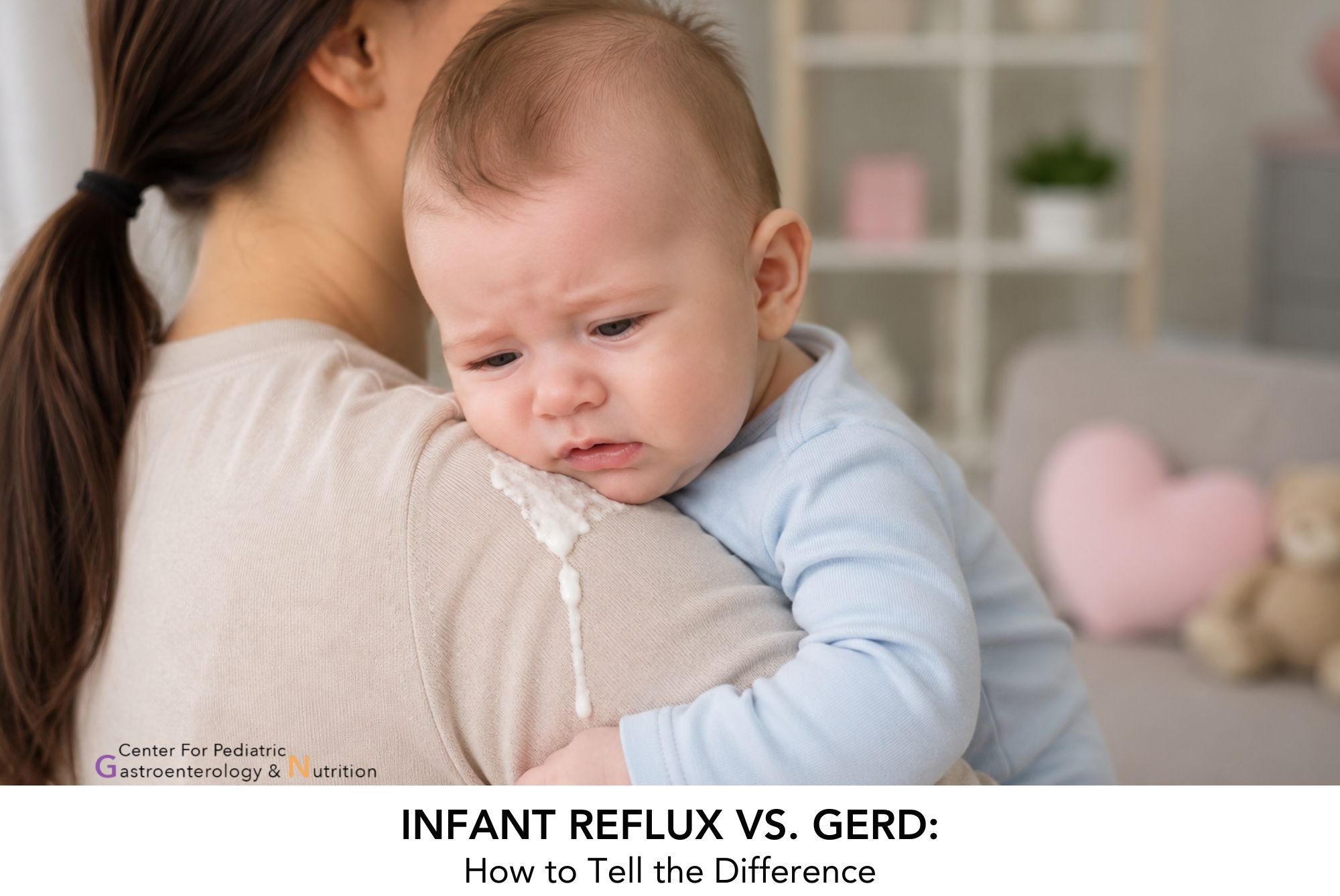
 Infant reflux is one of the most common concerns new parents discuss with their pediatrician. Seeing a baby spit up after feeding can be alarming, but in many cases, it is a completely normal part of infancy. However, when reflux becomes severe, causes pain, affects growth, or leads to complications, it may be a sign of gastroesophageal reflux disease (GERD).
Understanding the difference between normal infant reflux and infant GERD is important because the treatment approach varies significantly. Most babies outgrow simple reflux without intervention, while GERD often requires a more comprehensive medical evaluation and treatment plan.
At the Center for Pediatric Gastroenterology and Nutrition, our pediatric gastroenterology specialists evaluate infants experiencing persistent feeding difficulties, excessive vomiting, poor weight gain, and other digestive concerns. Our goal is to identify the cause of your child’s symptoms and provide evidence-based, compassionate care.
What Is Infant Reflux?
Infant reflux occurs when stomach contents flow backward into the esophagus. This happens because the lower esophageal sphincter (LES)—the muscle that keeps food in the stomach—is still developing during infancy.
Since infants spend much of their time lying flat and consume an all-liquid diet, occasional reflux is expected. This is why many healthy babies spit up after feeding without experiencing discomfort.
Reflux in infants typically begins within the first few weeks of life, peaks around 3 to 4 months of age, and gradually improves as babies begin sitting upright, eating solid foods, and their digestive system matures. Most infants outgrow reflux by 12 to 18 months of age.
Why Babies Spit Up
Baby spitting up is usually harmless and does not indicate illness. Small amounts of milk or formula may come back up after feeding because the stomach is full and the esophagus is still immature.
Common reasons include:
Immature Digestive System
The valve between the stomach and esophagus has not fully strengthened, allowing milk to flow backward more easily.
Overfeeding
An overly full stomach increases pressure, making spit-up more likely.
Swallowing Air
Babies who swallow excess air while feeding may burp along with small amounts of milk.
Position Changes
Lying down immediately after feeding or being bounced can contribute to reflux episodes.
Most infants remain happy, continue feeding normally, and gain weight appropriately despite frequent spit-up.
What Is Infant GERD?
Infant GERD (gastroesophageal reflux disease) occurs when reflux becomes severe enough to cause symptoms, complications, or damage to the esophagus.
Unlike uncomplicated reflux, GERD can interfere with feeding, growth, comfort, and overall health.
Although many infants experience occasional reflux, only a smaller percentage develop true GERD requiring medical evaluation and treatment.
Signs That Reflux May Be GERD
Parents should contact their pediatrician or pediatric gastroenterologist if reflux is accompanied by concerning symptoms.
Poor Weight Gain
Infants with GERD may refuse feeds or lose calories through repeated vomiting, resulting in inadequate weight gain.
Frequent Forceful Vomiting
Large-volume vomiting after nearly every feeding is different from typical spit-up.
Feeding Refusal
Some babies associate eating with pain and begin refusing bottles or breastfeeding.
Excessive Crying During Feeding
Pain caused by acid exposure may make infants arch their backs, pull away from feeding, or cry intensely.
Persistent Irritability
Babies experiencing painful reflux may appear uncomfortable throughout the day rather than only after feeding.
Chronic Cough or Wheezing
Reflux can sometimes irritate the airways, leading to respiratory symptoms.
Blood in Vomit
Blood may indicate irritation or injury to the esophagus and should always be evaluated promptly.
Difficulty Swallowing
Painful swallowing or choking episodes may suggest more advanced disease.
Risk Factors for Infant GERD
Certain infants have a greater likelihood of developing GERD.
These include:
- Premature infants
- Babies with neurological disorders
- Children with congenital gastrointestinal abnormalities
- Infants with chronic lung disease
- Babies with obesity later in infancy
- Family history of severe GERD
How Pediatric Gastroenterologists Diagnose Infant GERD
Most infants can be diagnosed based on a careful medical history and physical examination.
If symptoms are severe or persistent, additional testing may be recommended.
Growth Assessment
Monitoring weight gain is one of the most important indicators of whether reflux is affecting nutrition.
Feeding History
Your child’s physician will evaluate feeding schedules, feeding amounts, symptoms during meals, and formula or breastfeeding history.
Upper GI Imaging
Imaging studies may help rule out structural abnormalities causing vomiting.
Esophageal pH Monitoring
This test measures how often stomach acid enters the esophagus.
Impedance Testing
Combined pH-impedance monitoring detects both acidic and non-acidic reflux episodes.
Upper Endoscopy
In select cases, an endoscopy allows direct visualization of the esophagus and evaluation for inflammation or other digestive disorders.
Conservative Treatment for Infant Reflux
Most babies with uncomplicated reflux improve with simple lifestyle adjustments.
Smaller, More Frequent Feedings
Offering smaller feeding volumes more often helps reduce stomach pressure.
Burping During Feeding
Frequent burping minimizes swallowed air.
Keeping Baby Upright
Holding your baby upright for 20 to 30 minutes after feeding can reduce reflux episodes.
Avoid Overfeeding
Following appropriate feeding volumes for your baby’s age helps prevent excessive stomach distention.
Formula Adjustments
Some infants benefit from specialized formulas if a cow’s milk protein allergy or feeding intolerance is suspected. Formula changes should always be discussed with your pediatrician.
Medical Treatment for Infant GERD
Medication is not recommended for uncomplicated reflux but may be appropriate for infants diagnosed with GERD.
Treatment options may include:
Acid-Suppressing Medications
Proton pump inhibitors (PPIs) or H2 receptor blockers reduce stomach acid, allowing the esophagus to heal while decreasing discomfort.
Nutritional Management
Your physician may recommend dietary modifications or specialized formulas based on your infant’s condition.
Monitoring Growth
Regular follow-up ensures babies continue growing appropriately and that treatment remains effective.
When Infant Reflux Requires Immediate Medical Attention
Parents should seek prompt medical care if their infant experiences:
Green Vomiting
Green (bilious) vomit may indicate an intestinal blockage requiring emergency evaluation.
Persistent Projectile Vomiting
Forceful vomiting after every feeding could suggest pyloric stenosis or another medical condition.
Blood in Vomit
Any blood should be evaluated promptly.
Poor Feeding
Infants refusing feeds or becoming dehydrated require immediate assessment.
Difficulty Breathing
Coughing, choking, blue lips, or breathing problems during feeding warrant urgent medical attention.
Fever in Young Infants
Vomiting accompanied by fever should always be discussed with your pediatrician.
Long-Term Outlook for Infants With Reflux
The outlook is excellent for most infants.
Simple reflux typically resolves naturally as the digestive tract matures. Babies become more upright, begin solid foods, and develop stronger digestive muscles over time.
Infants diagnosed with GERD generally improve with individualized treatment, close monitoring, and ongoing pediatric care. Early diagnosis helps prevent complications while supporting healthy growth and development.
Why Specialized Pediatric Gastroenterology Care Matters
Although many cases of reflux are normal, persistent symptoms should never be ignored. Pediatric gastroenterologists have specialized training in diagnosing digestive disorders unique to infants and children.
At the Center for Pediatric Gastroenterology and Nutrition, we provide comprehensive evaluations for infants experiencing reflux, feeding challenges, vomiting, poor weight gain, abdominal discomfort, and other gastrointestinal conditions. Our team works closely with families and primary care providers to develop personalized treatment plans that prioritize your child’s comfort, nutrition, and healthy development.
Frequently Asked Questions
Is baby spitting up always a sign of GERD?
No. Most babies who spit up have normal infant reflux rather than GERD. If your baby is comfortable, feeding well, and gaining weight, occasional spit-up is usually considered a normal developmental stage.
What is the difference between infant reflux and infant GERD?
Infant reflux involves occasional backflow of stomach contents without causing significant health problems. Infant GERD causes symptoms such as pain, feeding refusal, poor weight gain, inflammation of the esophagus, or respiratory complications.
When should I worry about reflux in infants?
Parents should seek medical evaluation if reflux is accompanied by poor weight gain, forceful vomiting, blood in vomit, feeding refusal, breathing problems, persistent irritability, or dehydration.
How common is infant reflux?
Infant reflux is extremely common during the first year of life. Most healthy infants experience some degree of spit-up that improves as they grow.
Does breastfeeding reduce reflux?
Breastfeeding is associated with many digestive benefits, and breastfed infants often empty their stomachs more quickly. However, both breastfed and formula-fed babies can experience reflux.
Can formula cause reflux?
Formula itself does not necessarily cause reflux, but certain infants may have sensitivities or allergies that contribute to feeding difficulties. A pediatrician or pediatric gastroenterologist can determine whether formula changes are appropriate.
Are reflux medications safe for babies?
Acid-suppressing medications should only be used when medically indicated. Current pediatric guidelines recommend avoiding unnecessary medications for infants with uncomplicated reflux.
Will my baby outgrow reflux?
Yes. Most infants naturally outgrow reflux between 12 and 18 months as their digestive system matures.
Can reflux affect my baby’s sleep?
Some infants with GERD experience discomfort that interrupts sleep. However, healthy infants should always be placed on their backs to sleep, following safe sleep recommendations, regardless of reflux.
When should my child see a pediatric gastroenterologist?
Referral is appropriate if symptoms persist despite conservative measures, your baby has poor growth, feeding difficulties, recurrent vomiting, or your pediatrician suspects GERD or another gastrointestinal disorder.
Contact Information
Center for Pediatric Gastroenterology and Nutrition
Website: https://centerforpedsgi.com
Request an Appointment: https://centerforpedsgi.com/appointments
Locations:
- Evergreen Park
- Naperville
- Elmhurst
- Romeoville
- Highland


